
Color Your Grass™
Decorating the Lawn with Spring Flowers
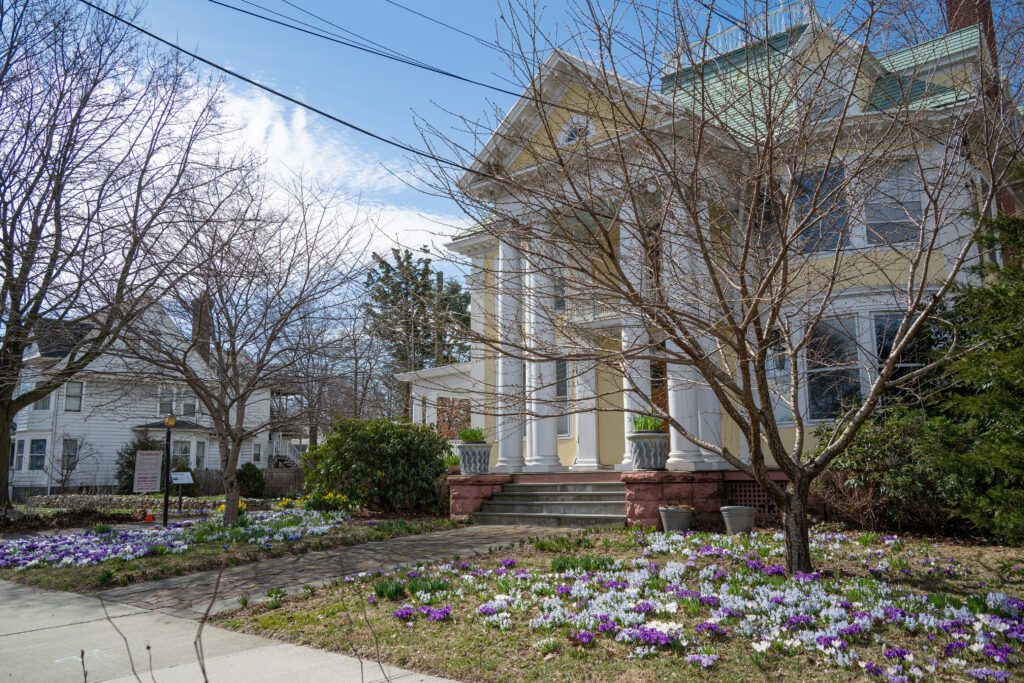
Crocuses and White Squill grace the front lawn of the Colorblends House & Spring Garden. The bulbs were planted more than 10 years ago. Mowing is delayed by several weeks after bloom to allow the bulbs time to store up the energy they will need to produce the following spring’s flowers.
In the Colorblends display garden, which Dutch designer Jacqueline van der Kloet originally laid out, the emphasis is on naturalistic plantings. This means bulbs are planted the way nature might do it. To keep maintenance to a minimum and mimic how bulbs often grow in the wild, most of the plantings are in turf. And to provide a long season of interest, they typically consist of bulbs that bloom in succession.
Visitors love these plantings, so we felt we should share some suggested recipes with our customers. Here are four to consider; many variations are possible. For design and planting instructions, see How to Plant Bulbs in Grass.
Please note: If you plant bulbs in grass, you must wait to mow until late spring or early summer, after the bulb foliage has completely yellowed. By the time the foliage has yellowed, the grass may be very tall, particularly if daffodils are in the mix.
Note to customers in warm climates: Some of the bulbs listed below require prechilling and are unlikely to perform well beyond the first spring.
1. An Early-Spring Carpet of White, Purple, and Light Blue
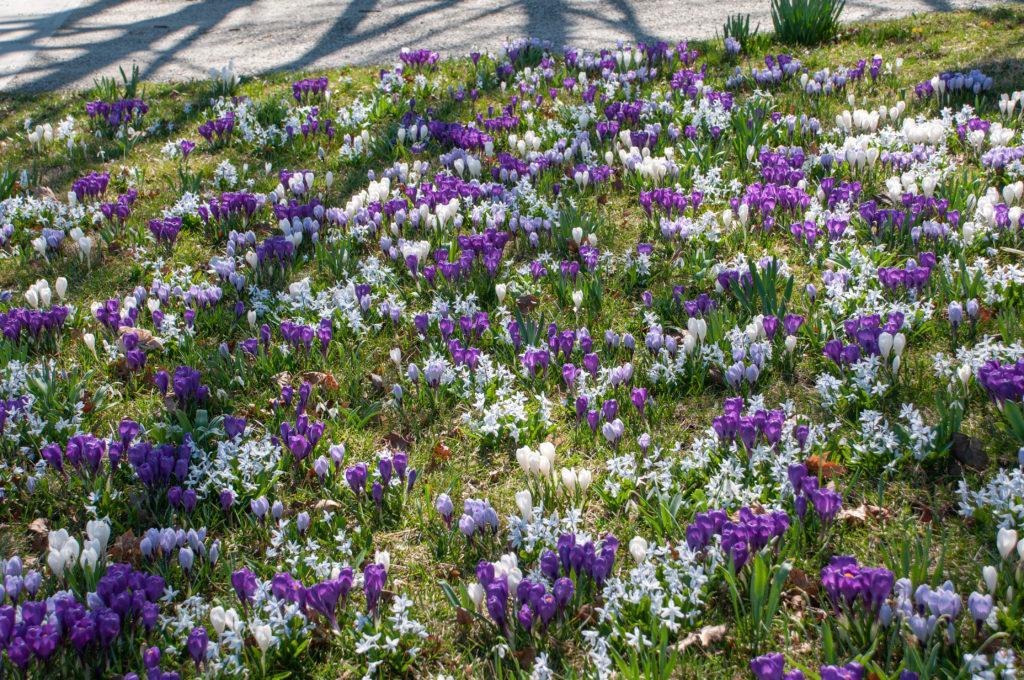
The show begins with Snowdrops, peaks with the Hokus Crocus Blend and White Squill, as shown above, and finishes with Glory of the Snow.

Snowdrops
5–7 inches
300 bulbs (15%)

Hokus Crocus™ Blend
4–6 inches
900 bulbs (45%)
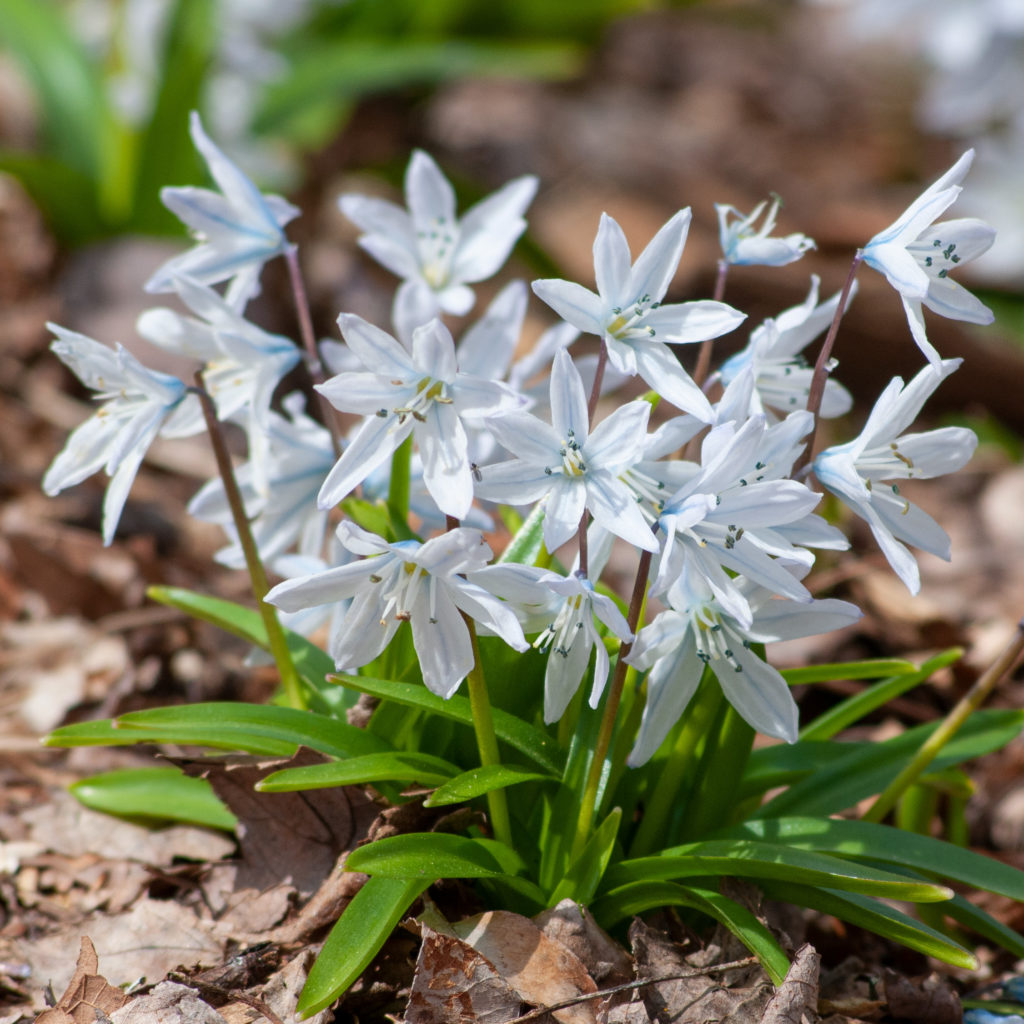
White Squill
4–6 inches
300 bulbs (15%)
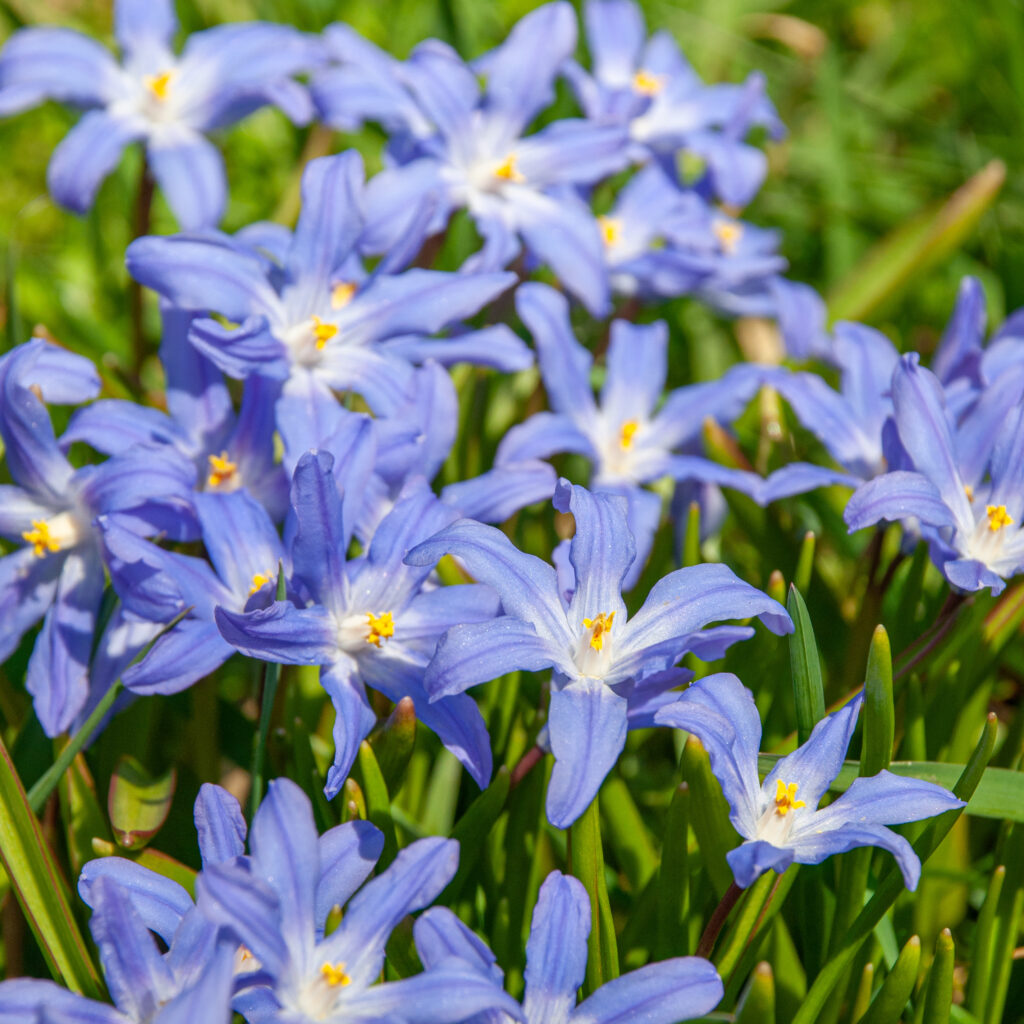
Glory of the Snow
3–5 inches
500 bulbs (25%)
2. A Colorful Mix That Spans Almost the Entire Spring Bulb Season

Tommies Crocuses give way to Blue Squill, Striped Squill, and Snake’s Head (shown above). Snowflake and finally Daffodil Poeticus Recurvus bring up the rear.
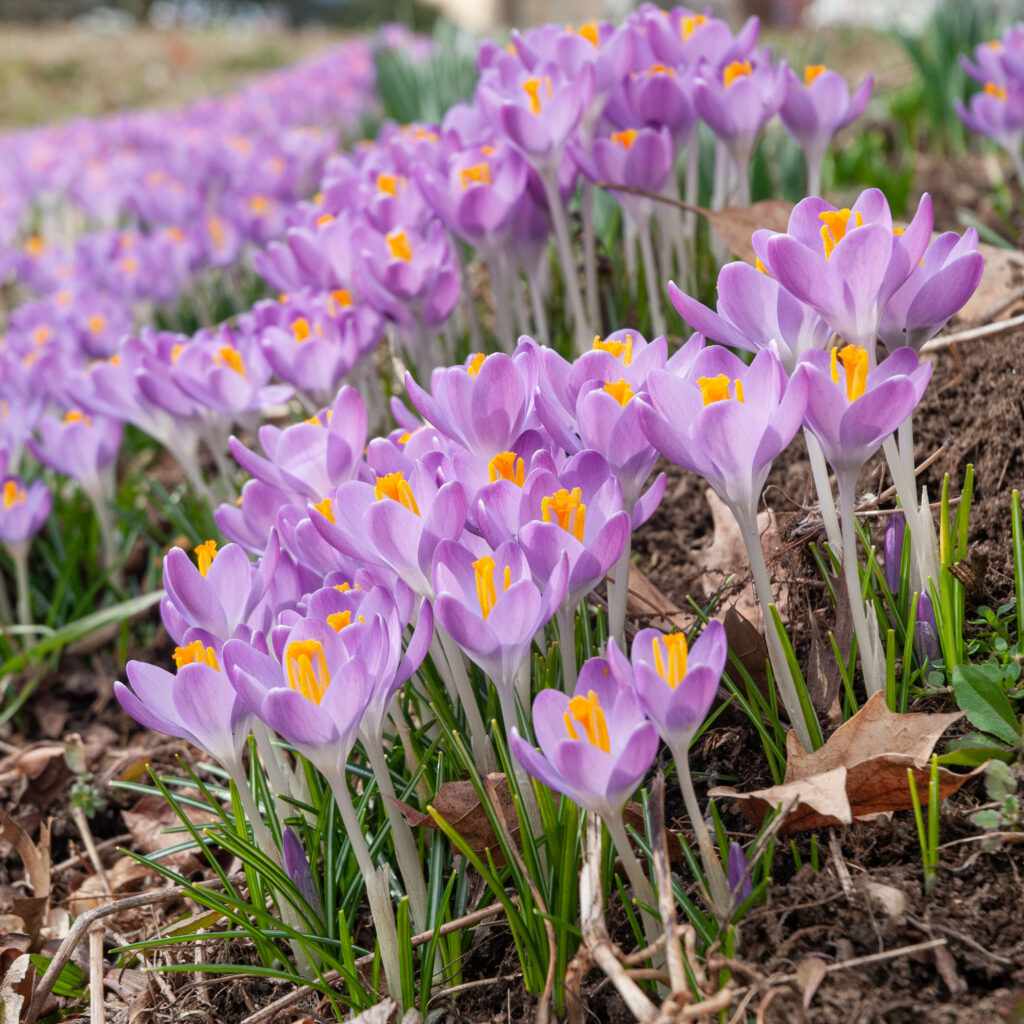
Tommies Crocuses
3–4 inches
500 bulbs (25%)
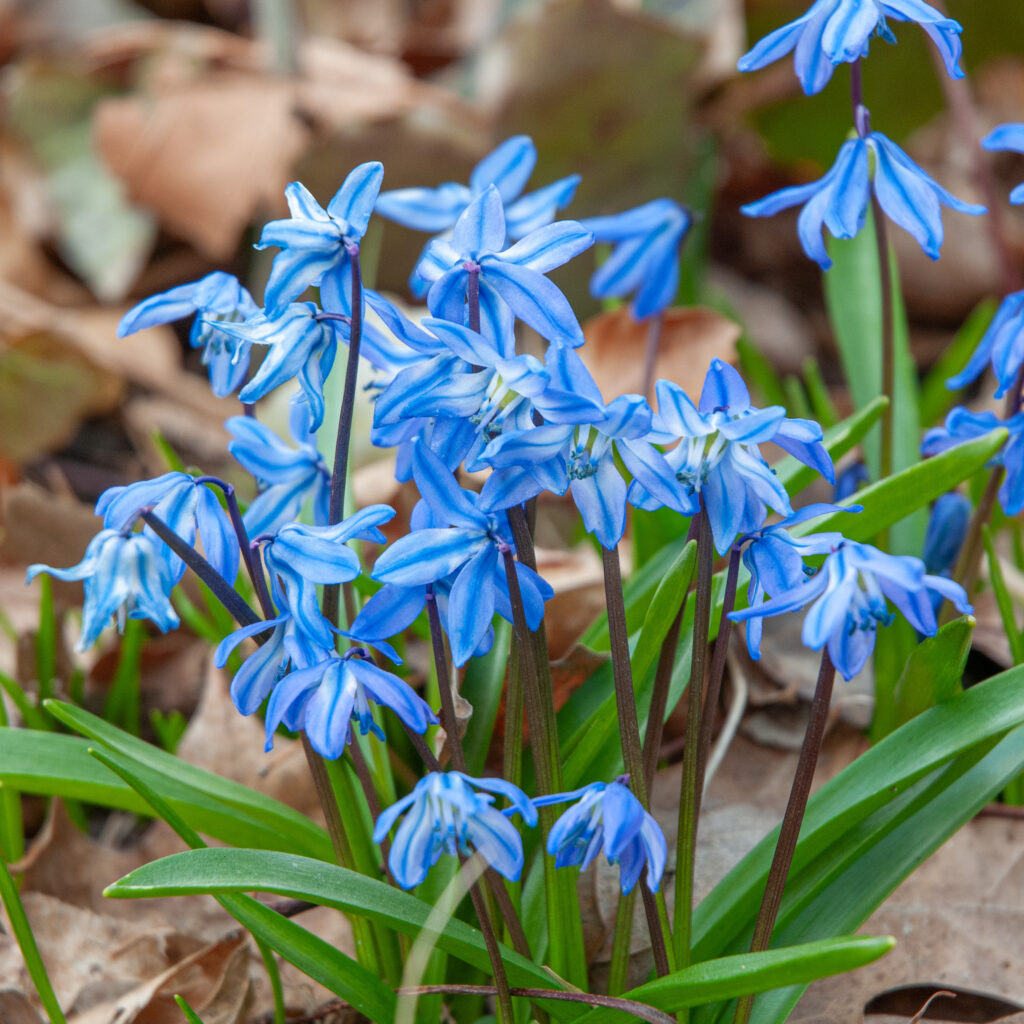
Blue Squill
5–7 inches
500 bulbs (25%)
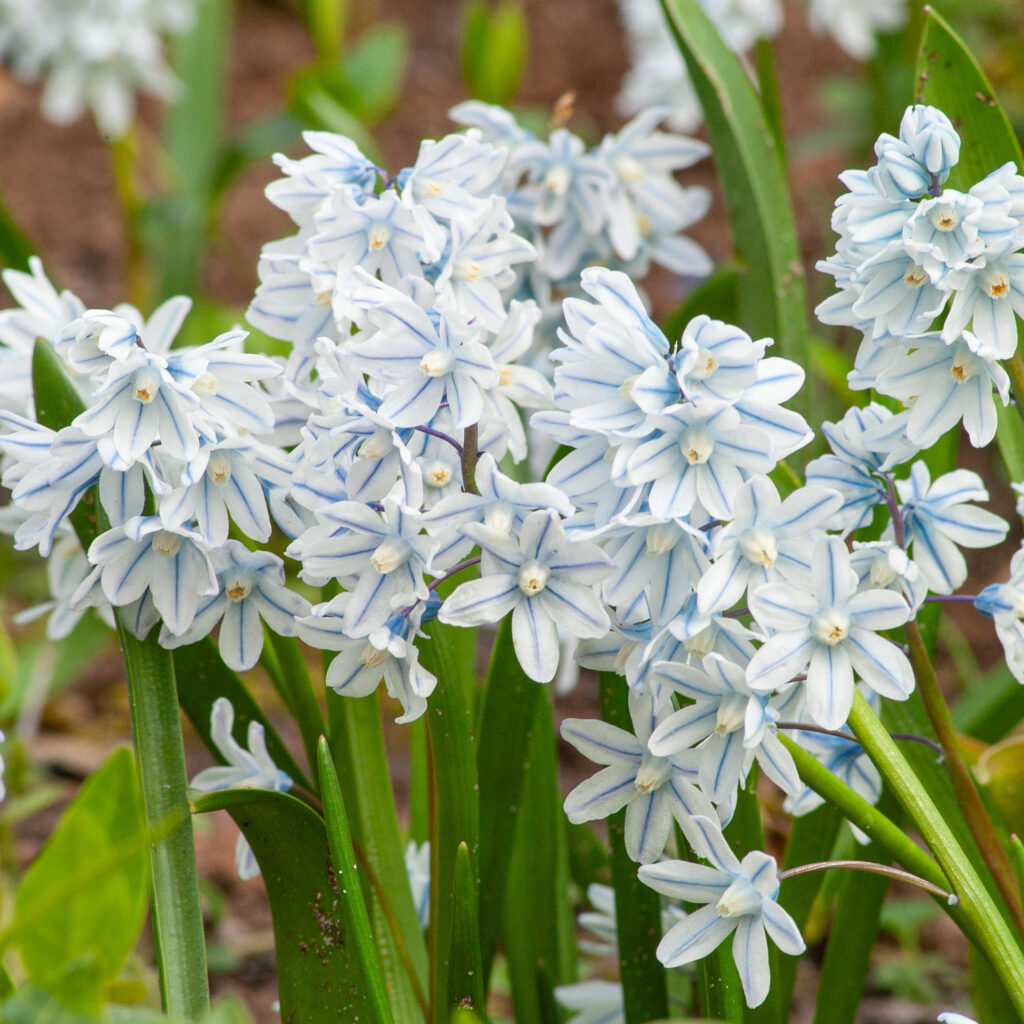
Striped Squill
5–7 inches
500 bulbs (25%)

Snake's Head
10–12 inches
400 bulbs (20%)

Snowflake
24–28 inches
50 bulbs (2.5%)
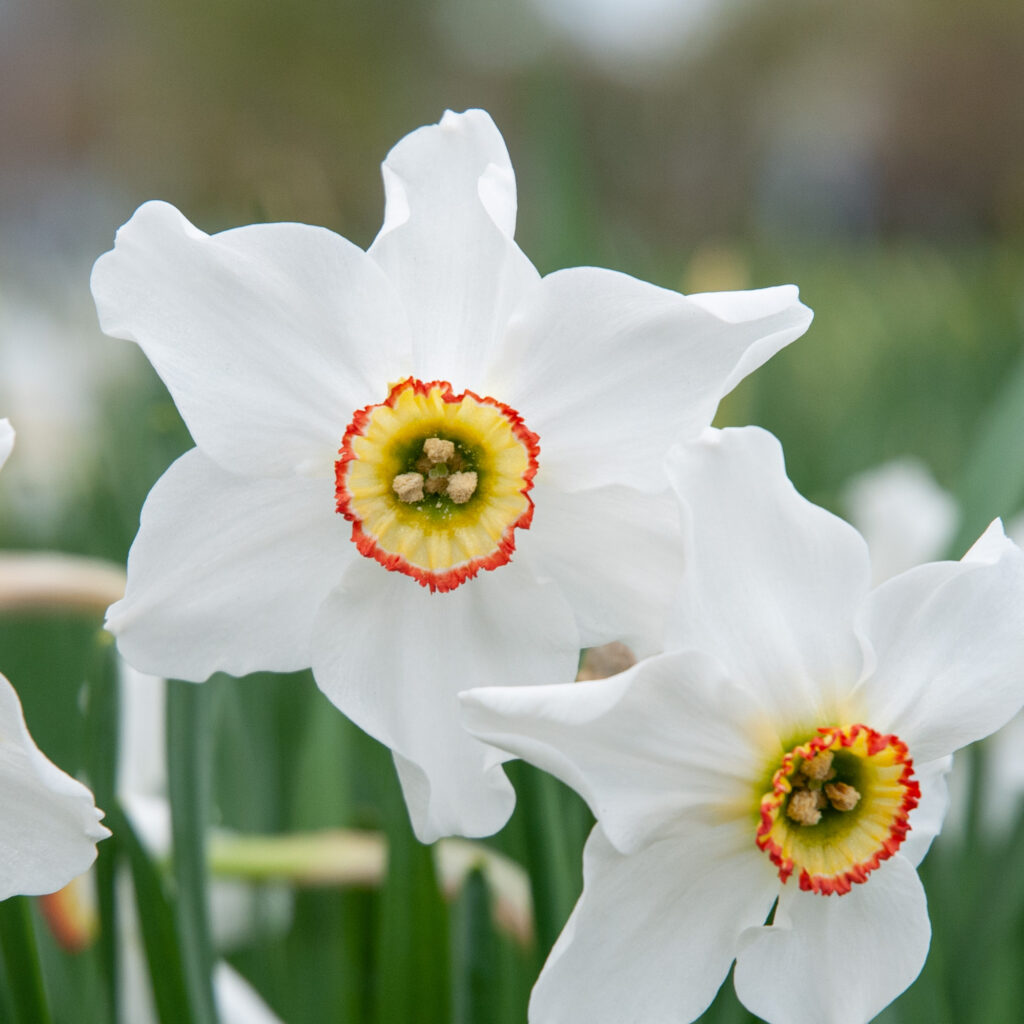
Daffodil Poeticus Recurvus
13–15 inches
50 bulbs (2.5%)
3. Spring Symphony in Blue, Yellow, and White
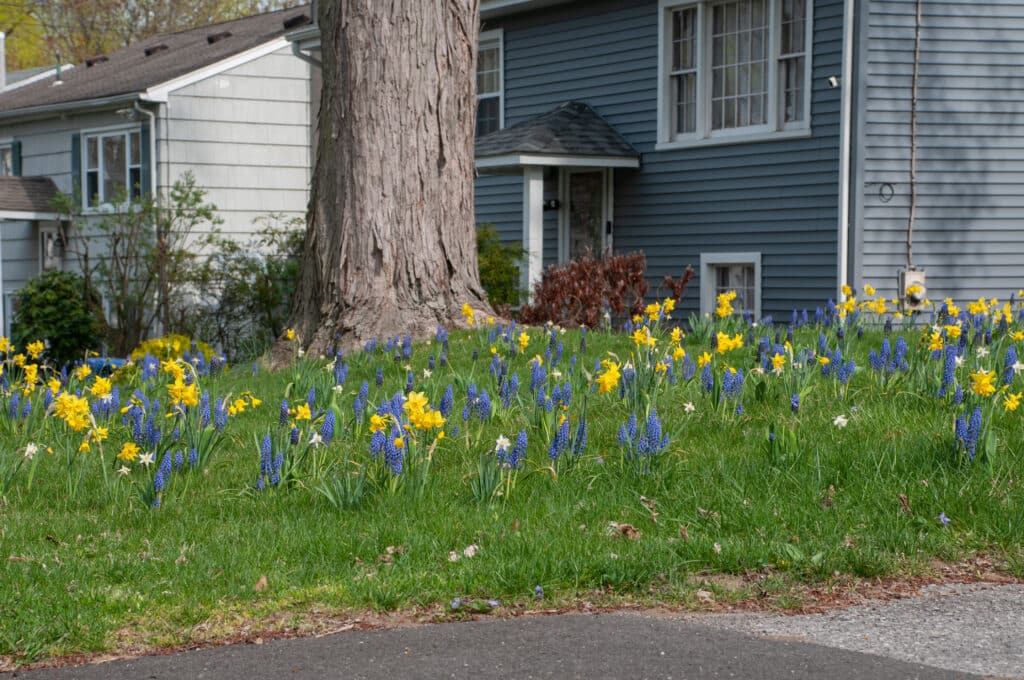
The composition begins with the miniature daffodil Elka; builds to a crescendo with Muscari Latifolium, Daffodil Yellow Ocean, and Grape Hyacinths; and winds down with Sun Disc, which has yet to make an appearance in the photo above.
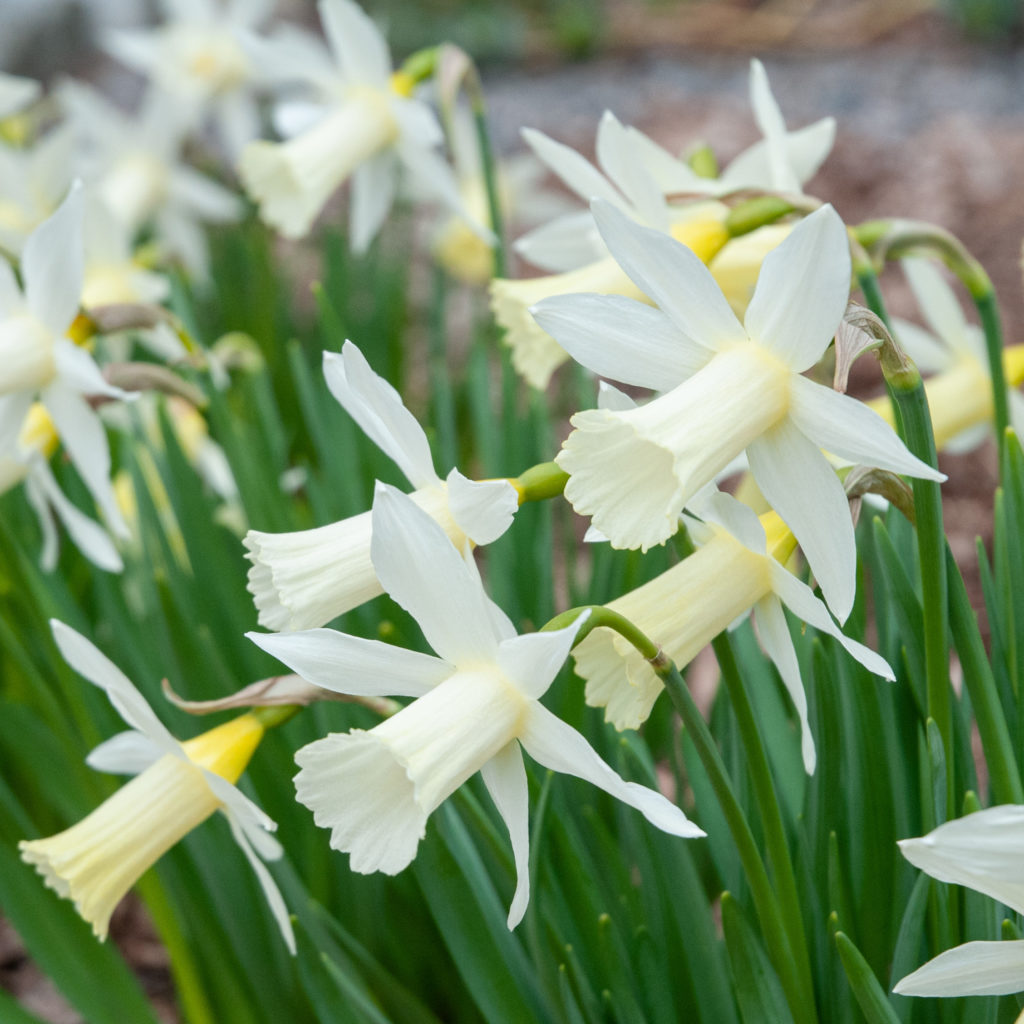
Daffodil Elka
6–8 inches
200 bulbs (20%)
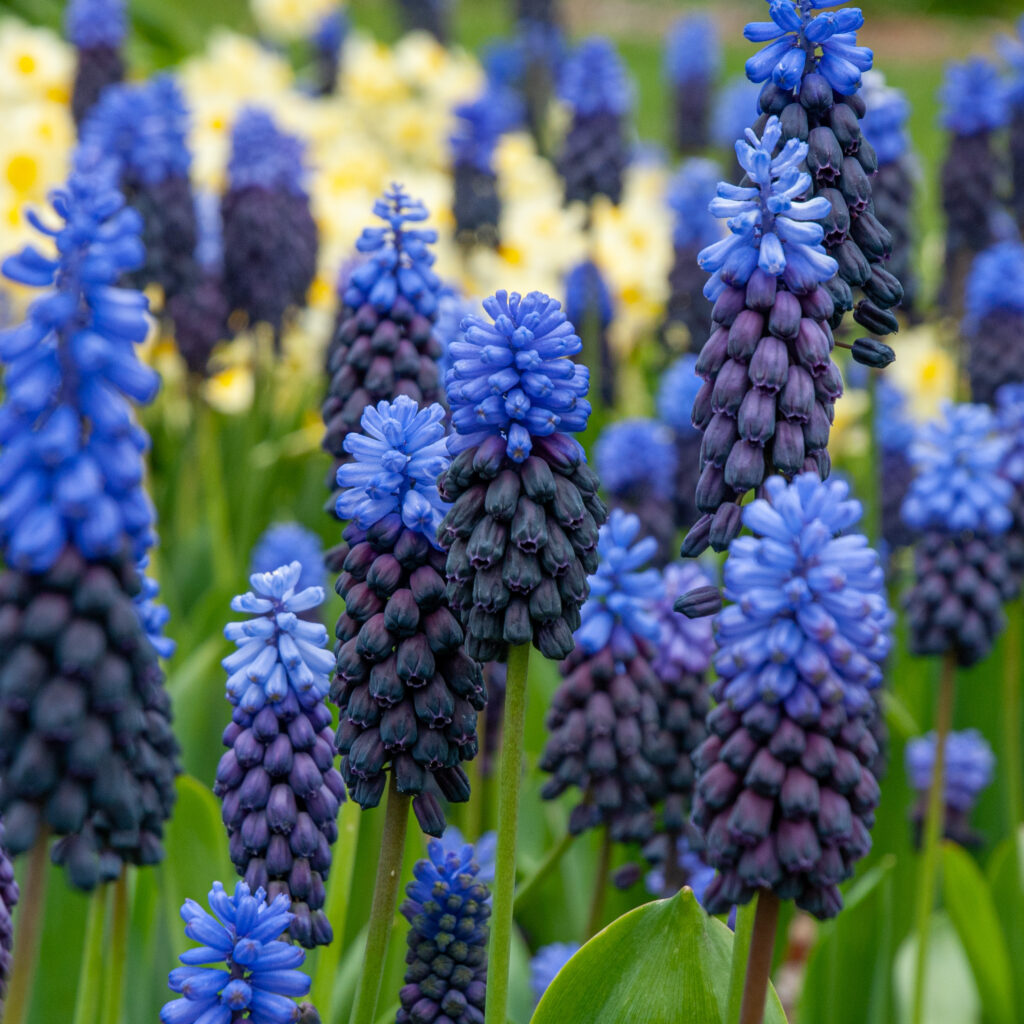
Muscari Latifolium
7–14 inches
300 bulbs (30%)
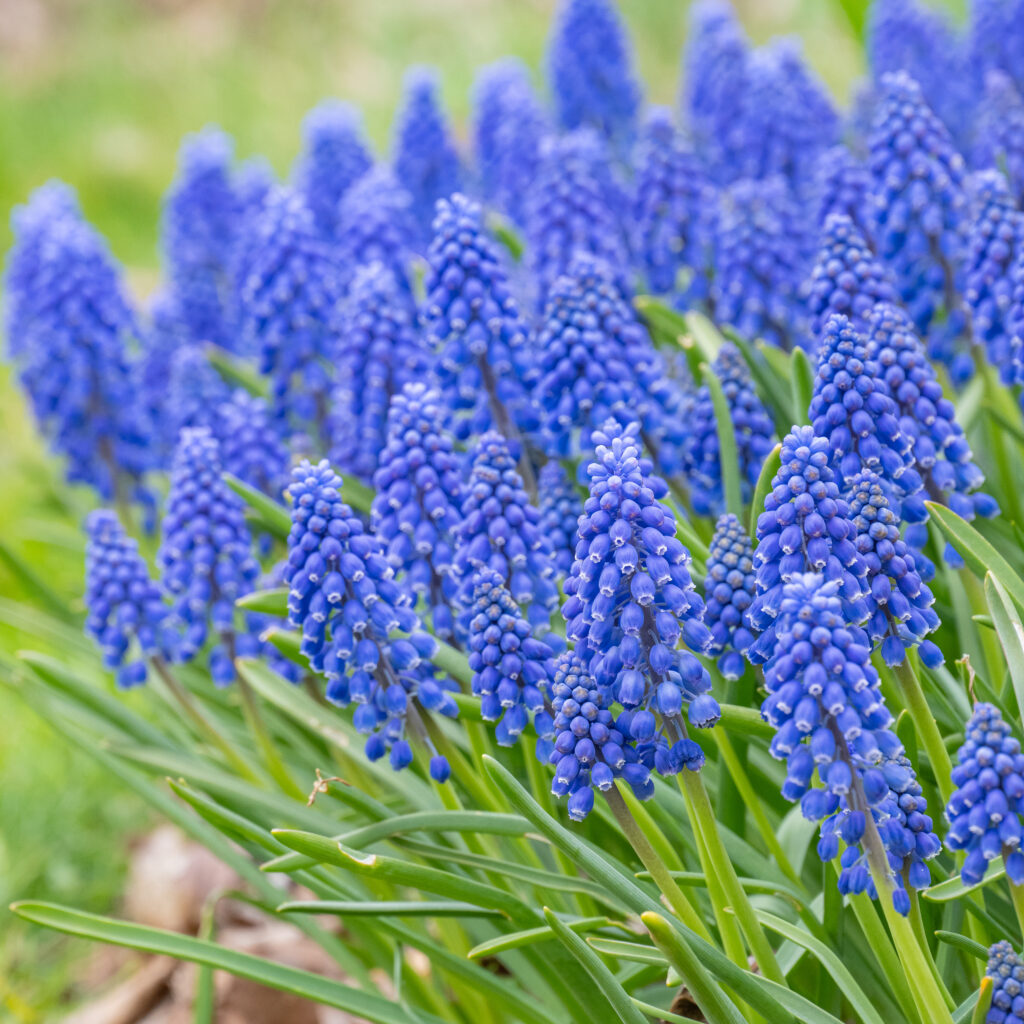
Grape Hyacinth
5–7 inches
300 bulbs (30%)
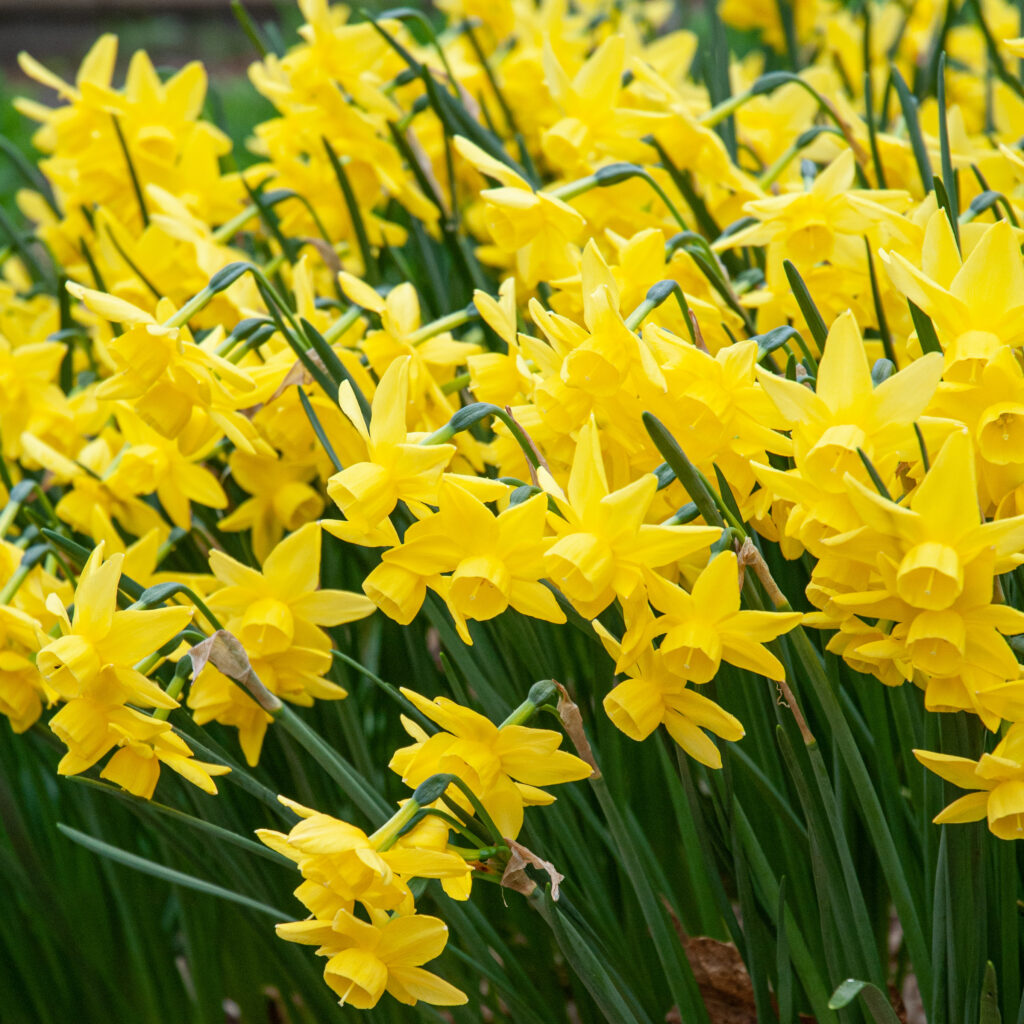
Daffodil Yellow Ocean
13–15 inches
100 bulbs (10%)
4. Appealing to the Eye, Unappetizing to Deer
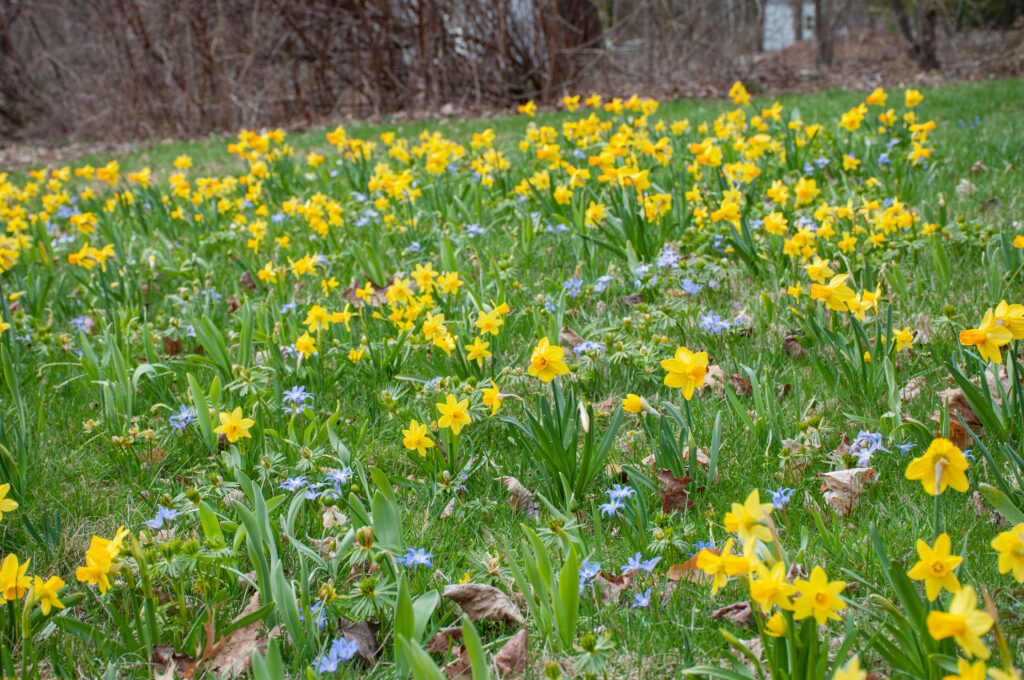
Snowdrops and Winter Wolf’s Bane get the ball rolling. They are soon followed by two miniature daffodils—Tête-à-Tête and Jetfire—and soft blue Glory of the Snow, as shown above. Daffodil Sun Disc brings down the curtain as the grass grows tall.
Snowdrops
5–7 inches
400 bulbs (about 27%)
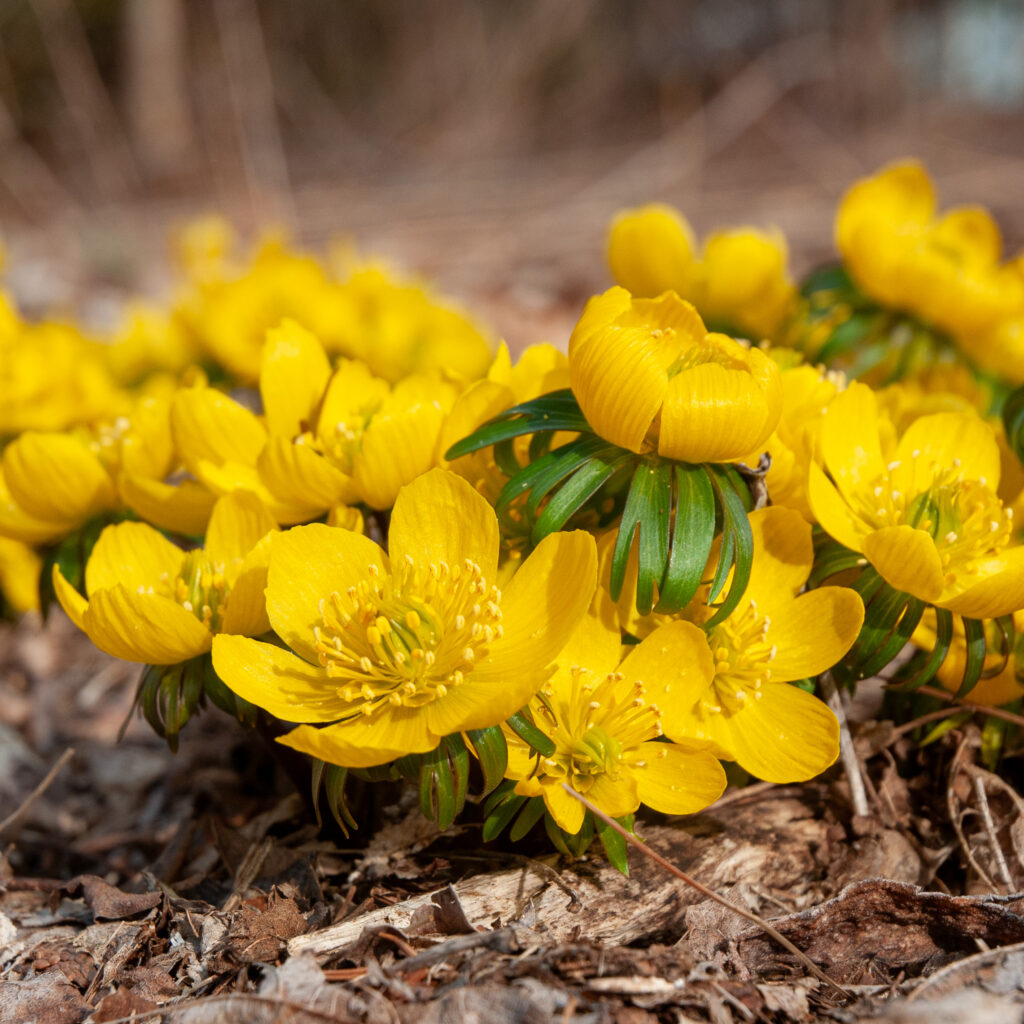
Winter Wolf's Bane
3–4 inches
400 bulbs (about 27%)
Glory of the Snow
3–5 inches
400 bulbs (about 27%)
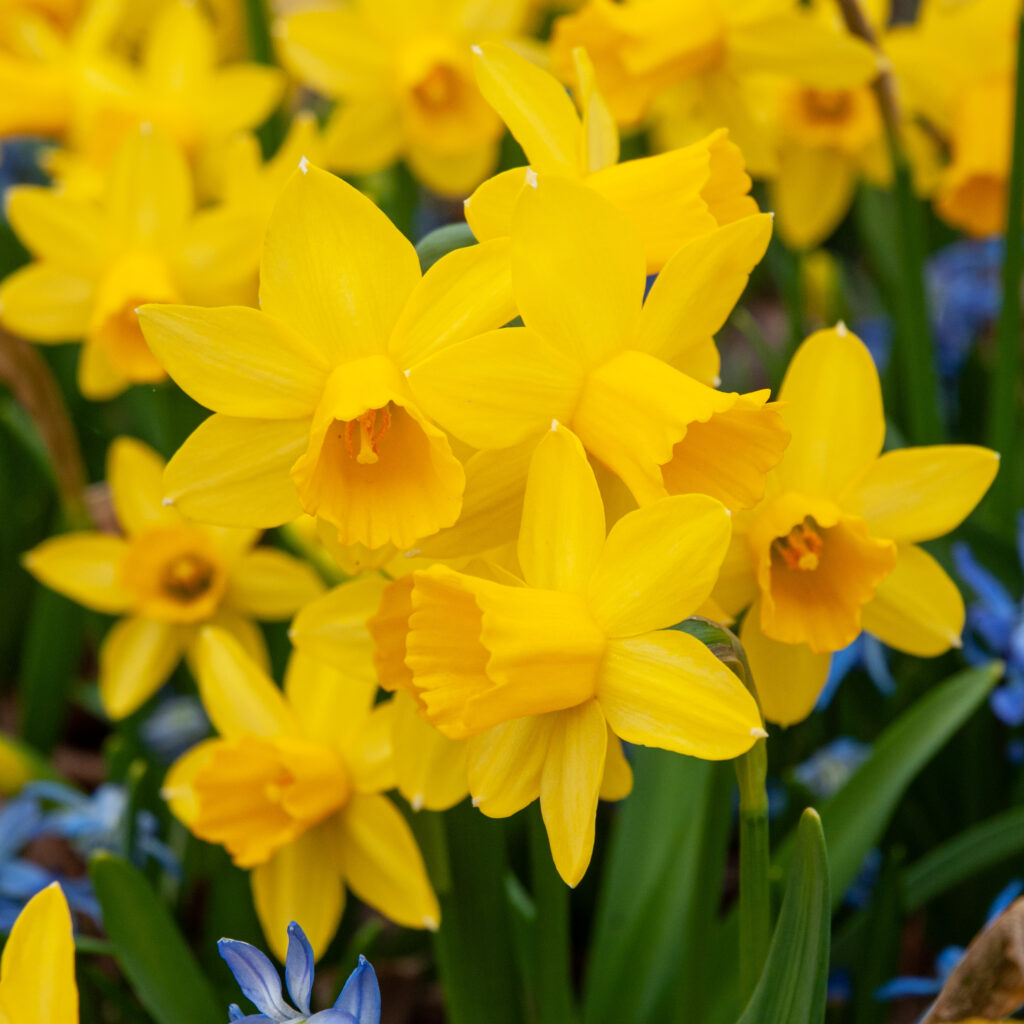
Daffodil Tête-à-Tête
7–9 inches
100 bulbs (about 7%)

Daffodil Jetfire
10–12 inches
100 bulbs (about 7%)
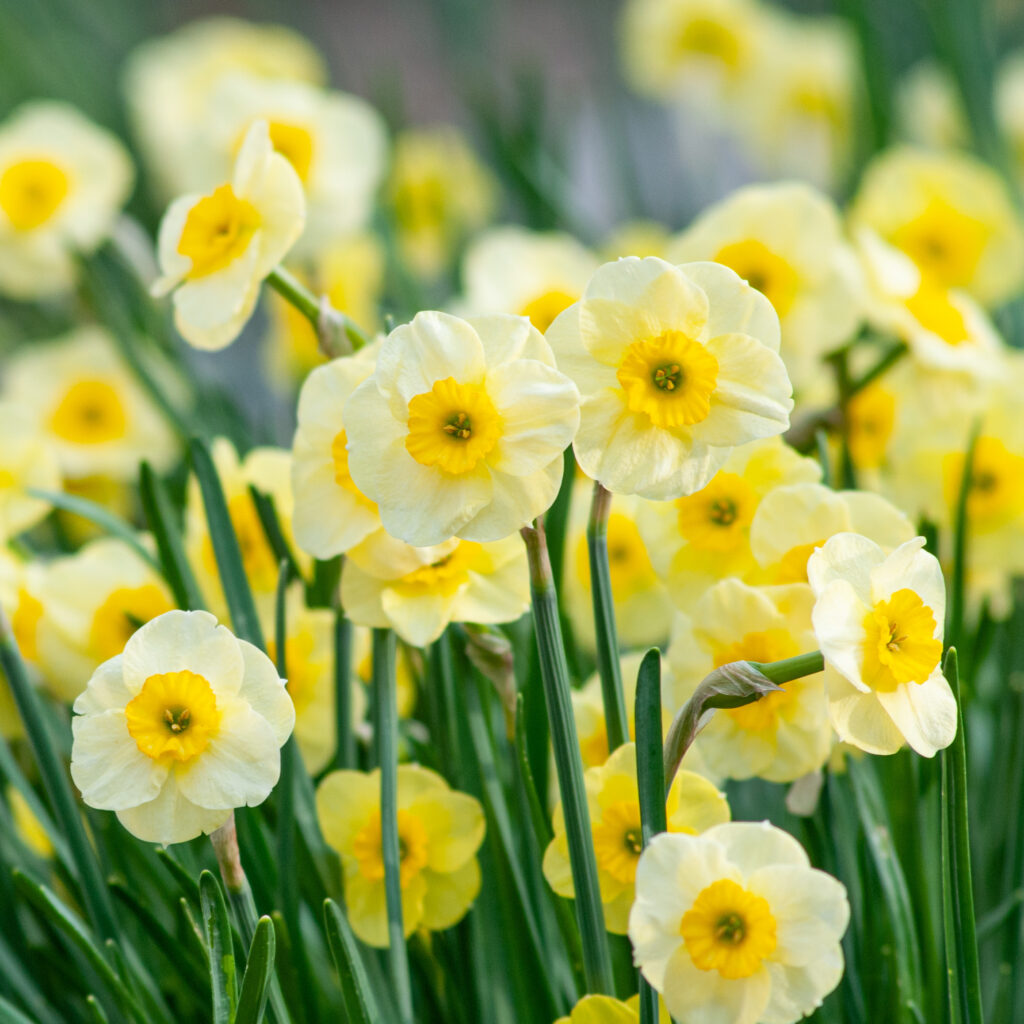
Daffodil Sun Disc
10–12 inches
100 bulbs (about 7%)